
• support@parceltraceglobal.com
  • 121 WallStreet Street, NY York, USA

Get In Touch

90 154 456 784

Awesome Image

USTR proposes new Section 301 tariffs on 60 countries as Section 122 duties near expiration

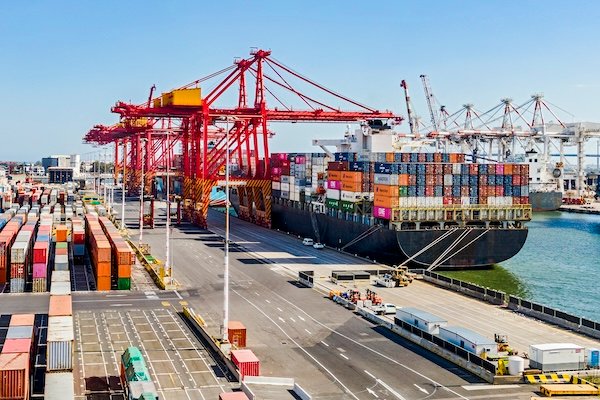
Elevated view container ship loading/unloading Port of Melbourne Swanson Dock container terminal. Three moored container ships are being loaded/unloaded by a row of red gantry cranes on the left with a row of white cranes on the right of frame. Also to the left are rows of multi-coloured stacked containers waiting for transportation. Multiple logos visible, none dominant, distinctive ID and ship/vessel names edited.

With the White House’s 10% Section 122 tariffs set to expire in late July, the office of the United States Trade Representative (USTR) yesterday proposed rolling out new tariffs on 60 countries.

The USTR said this is based under the guidelines under Section 301 of the Trade Act of 1974, stating that, “the acts, policies, and practices of these countries related to the failure to impose and effectively enforce a prohibition on the importation of goods produced with forced labor is unreasonable and burdens or restricts U.S. commerce, and are thus actionable under Section 301 (b) of the Trade Act.”

In March, the USTR announced Section 301 investigations related to what it called structural excess capacity and production in manufacturing sectors. Which was subsequently followed by an announcement indicating it had added another 60 countries to its Section 301 investigations list. The impetus for these additional investigations, according to USTR, was to determine whether acts, policies, and practices of each of these economies related to the failure to impose and effectively enforce a ban on the importation of goods produced with forced labor are unreasonable or discriminatory and burden or restrict U.S. commerce. 

“The failure of our most important trading partners to address the importation of goods made with forced labor is unacceptable.  This creates a dynamic where American workers are forced to compete globally on an unlevel playing field,” said Ambassador Jamieson Greer.  “We will no longer tolerate this disparity.  Some trading partners have taken initial steps to prevent the importation of forced labor goods, including through USMCA and commitments in Agreements on Reciprocal Trade.  However, each of our trading partners must do more to ensure that trade does not perversely encourage and entrench forced labor globally.”  

In terms of the planned tariffs, the USTR said it is proposing additional duties on all products of the investigated economies, with economies imposing a forced labor import prohibition and have committed to impose and enforce such a prohibition through an Agreement on Reciprocal Trade, as well as economies that have imposed a partial regime with the effect of preventing the importation of certain forced labor goods, it is calling for a 10% tariff. And for all other economies, it is proposing a 12.5% tariff, in addition to proposing a textile mechanism allowing for a certain volume of apparel and textile imports from certain economies to enter the U.S. at a reduced Section 301 tariff rate.

As previously reported by LM, in February, the United States Supreme Court ruled against the legality of the Trump administration’s implementation of tariffs under International Economic Emergency Protection Act (IEEPA). The White House did not hesitate to move forward with a 10% Section 122 tariff in its place, for a 150-day period, set to expire in late July, for what it describes as serious international payment imbalance and a growing U.S. balance-of-payments deficit, as well as pushing for increased domestic manufacturing, and stemming the flow of fentanyl across U.S. borders from Canada and Mexico.

Since then, a refund process through U.S. Customs and Border Protection went into effect on April 20, in the form of a new electronic tool called CAPE, the Consolidated Administration and Processing of Entries, that lets importers submit claims directly through the ACE Secure Data Portal. It gives companies their first clear way to recover duties tied to the now-invalid tariffs.

CBP said more than 330,000 importers paid roughly $166 billion in IEEPA duties across more than 53 million entries, making this one of the largest duty recovery efforts in recent history.

While the White House has commenced the refund process, a New York Times report published today stated that it is pushing back on the court order regarding paying out the refunds, with the report noting that the White House, “has indicated that it could hold up the return of potentially tens of billions in those previously paid duties.” 

In a LinkedIn post, Pete Mento, Director, Global Trade Management Services, at Baker Tilly, likened Section 301 to the trade equivalent of the spare key hidden under the flower pot.  

“When one legal authority gets challenged, policymakers start looking for another door into the house,” wrote Mento. “The important thing here is that no new tariffs have been announced yet. But if you’ve been wondering what comes after the reciprocal tariff cases, the Section 122 litigation, the appeals, the appeals of the appeals, and the inevitable appeals of those appeals… well, this may be your answer. The bigger lesson for importers remains the same: Stop treating tariffs as a temporary disruption. Start treating tariffs as a permanent operating expense that occasionally changes names. The duty rate may change. The legal authority may change. The court cases may change. But the tariffs? The tariffs appear to have achieved immortality.”

Keith Prather, Managing Director and Co-founder, at Armada Corporate Intelligence, told LM that the 12.5% tariff is lower than anticipated, adding that by showing by what he called “modicum of compliance,” some of the countries are already down at 10%, matching the level of the current Section 122 tariffs.

“What I don’t know is whether the other Section 301 investigation on structural imbalances would stack on these,” said Prather. “If one of those countries were found in violation and had 301’s applied in both cases, would they stack?  We don’t know that yet. I thought we would eventually get to this stage: a new level of complexity in understanding applied tariffs. It’s a mess.  

Overall, it’s not as bad as I thought it would be at first blush—but that solely depends on how the other 301 investigation comes in and whether they stack. For those 16 countries, if they are all found in violation, this 12.5% could be the base with another 10% or something stacked on top of it. At that point, it’s a hefty lift. Most firms had adjusted their pricing under the IEEPA tariffs at 15%-to-18%. The 122s at 10% were a bit of a tariff holiday of sorts (just look at how strong most earnings are). This first 12.5% is probably already built into pricing, but an additional 301 on top of it might force another industry market price adjustment.” 

In a statement provided to LM, National Retail Federation (NRF) Vice President of Supply Chain and Customs Policy Jonathan Gold said that the retail industry abhors the use of forced labor in the global supply chain.

“Retailers continue to take meaningful steps to eliminate the use of forced labor by working closely with their supply chain partners,” added Gold. “As noted in our joint statement for the record, we do not believe tariffs are the appropriate tool to address whether a country has a ban on imports of goods made with forced labor. As USTR has correctly pointed out, many of the countries subject to the investigation and potential tariffs have laws and procedures in place or are engaged in negotiations as part of an Agreement on Reciprocal Trade. USTR and the U.S. government more broadly should continue working in partnership with the identified countries to address the use of forced labor in the supply chain. Retailers and other stakeholders should be considered partners to help achieve the goal in a collaborative effort, rather than through tariffs.”

There will be more to the White House tariff developments under Section 301 and other sections of trade law where tariffs can still be imposed going forwards, according to Paul Bingham, Director, Transportation Consulting, at S&P Global Market Intelligence. 

“The administration also seems likely to continue to negotiate with individual trade partner countries in ways that could affect these new Section 301 forced labor tariffs, including adjusting tariff rates imposed using other remaining valid mechanisms, for whatever combination of objectives the administration includes as conditions for any deal,” said Bingham. 

Leave A Comment

Recent News

Awesome Image

Cargo & Logistics Business Services

Contact Now
We use cookies to personalise content and ads, to provide social media features and to analyse our traffic. We also share information about your use of our site with our social media, advertising and analytics partners.
Cookies settings
Accept
Privacy & Cookie policy
Privacy & Cookies policy
Cookie name Active

Privacy Policy

What information do we collect?

We collect information from you when you register on our site or place an order. When ordering or registering on our site, as appropriate, you may be asked to enter your: name, e-mail address or mailing address.

What do we use your information for?

Any of the information we collect from you may be used in one of the following ways: To personalize your experience (your information helps us to better respond to your individual needs) To improve our website (we continually strive to improve our website offerings based on the information and feedback we receive from you) To improve customer service (your information helps us to more effectively respond to your customer service requests and support needs) To process transactions Your information, whether public or private, will not be sold, exchanged, transferred, or given to any other company for any reason whatsoever, without your consent, other than for the express purpose of delivering the purchased product or service requested. To administer a contest, promotion, survey or other site feature To send periodic emails The email address you provide for order processing, will only be used to send you information and updates pertaining to your order.

How do we protect your information?

We implement a variety of security measures to maintain the safety of your personal information when you place an order or enter, submit, or access your personal information. We offer the use of a secure server. All supplied sensitive/credit information is transmitted via Secure Socket Layer (SSL) technology and then encrypted into our Payment gateway providers database only to be accessible by those authorized with special access rights to such systems, and are required to?keep the information confidential. After a transaction, your private information (credit cards, social security numbers, financials, etc.) will not be kept on file for more than 60 days.

Do we use cookies?

Yes (Cookies are small files that a site or its service provider transfers to your computers hard drive through your Web browser (if you allow) that enables the sites or service providers systems to recognize your browser and capture and remember certain information We use cookies to help us remember and process the items in your shopping cart, understand and save your preferences for future visits, keep track of advertisements and compile aggregate data about site traffic and site interaction so that we can offer better site experiences and tools in the future. We may contract with third-party service providers to assist us in better understanding our site visitors. These service providers are not permitted to use the information collected on our behalf except to help us conduct and improve our business. If you prefer, you can choose to have your computer warn you each time a cookie is being sent, or you can choose to turn off all cookies via your browser settings. Like most websites, if you turn your cookies off, some of our services may not function properly. However, you can still place orders by contacting customer service. Google Analytics We use Google Analytics on our sites for anonymous reporting of site usage and for advertising on the site. If you would like to opt-out of Google Analytics monitoring your behaviour on our sites please use this link (https://tools.google.com/dlpage/gaoptout/)

Do we disclose any information to outside parties?

We do not sell, trade, or otherwise transfer to outside parties your personally identifiable information. This does not include trusted third parties who assist us in operating our website, conducting our business, or servicing you, so long as those parties agree to keep this information confidential. We may also release your information when we believe release is appropriate to comply with the law, enforce our site policies, or protect ours or others rights, property, or safety. However, non-personally identifiable visitor information may be provided to other parties for marketing, advertising, or other uses.

Registration

The minimum information we need to register you is your name, email address and a password. We will ask you more questions for different services, including sales promotions. Unless we say otherwise, you have to answer all the registration questions. We may also ask some other, voluntary questions during registration for certain services (for example, professional networks) so we can gain a clearer understanding of who you are. This also allows us to personalise services for you. To assist us in our marketing, in addition to the data that you provide to us if you register, we may also obtain data from trusted third parties to help us understand what you might be interested in. This ‘profiling’ information is produced from a variety of sources, including publicly available data (such as the electoral roll) or from sources such as surveys and polls where you have given your permission for your data to be shared. You can choose not to have such data shared with the Guardian from these sources by logging into your account and changing the settings in the privacy section. After you have registered, and with your permission, we may send you emails we think may interest you. Newsletters may be personalised based on what you have been reading on theguardian.com. At any time you can decide not to receive these emails and will be able to ‘unsubscribe’. Logging in using social networking credentials If you log-in to our sites using a Facebook log-in, you are granting permission to Facebook to share your user details with us. This will include your name, email address, date of birth and location which will then be used to form a Guardian identity. You can also use your picture from Facebook as part of your profile. This will also allow us and Facebook to share your, networks, user ID and any other information you choose to share according to your Facebook account settings. If you remove the Guardian app from your Facebook settings, we will no longer have access to this information. If you log-in to our sites using a Google log-in, you grant permission to Google to share your user details with us. This will include your name, email address, date of birth, sex and location which we will then use to form a Guardian identity. You may use your picture from Google as part of your profile. This also allows us to share your networks, user ID and any other information you choose to share according to your Google account settings. If you remove the Guardian from your Google settings, we will no longer have access to this information. If you log-in to our sites using a twitter log-in, we receive your avatar (the small picture that appears next to your tweets) and twitter username.

Children’s Online Privacy Protection Act Compliance

We are in compliance with the requirements of COPPA (Childrens Online Privacy Protection Act), we do not collect any information from anyone under 13 years of age. Our website, products and services are all directed to people who are at least 13 years old or older.

Updating your personal information

We offer a ‘My details’ page (also known as Dashboard), where you can update your personal information at any time, and change your marketing preferences. You can get to this page from most pages on the site – simply click on the ‘My details’ link at the top of the screen when you are signed in.

Online Privacy Policy Only

This online privacy policy applies only to information collected through our website and not to information collected offline.

Your Consent

By using our site, you consent to our privacy policy.

Changes to our Privacy Policy

If we decide to change our privacy policy, we will post those changes on this page.
Save settings
Cookies settings