

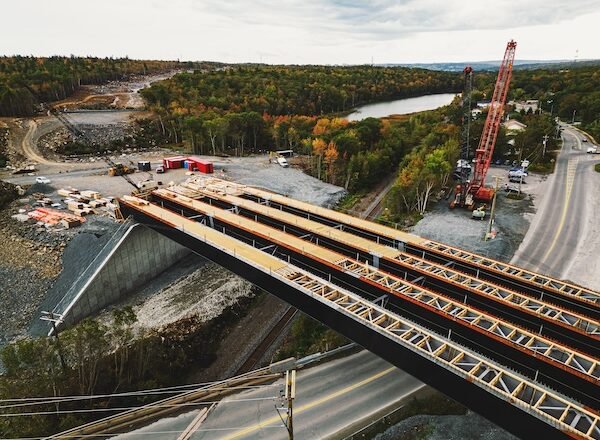
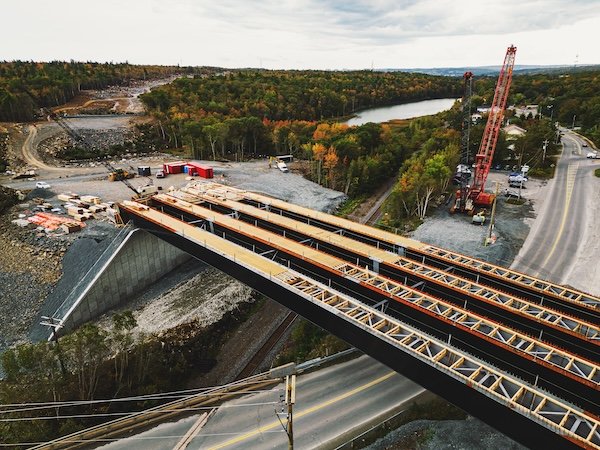
Following the introduction of the BUILD (Building Unrivaled Infrastructure and Long-term Development) America 250 Act, earlier this week by the House Transportation & Infrastructure (T&I) Committee, the legislation, the five-year, bipartisan surface transportation reauthorization bill was approved by the committee after a 14-hour legislative markup.
The House T&I Committee said that this legislation, “emphasizes moving people, goods, and freight safely and efficiently across the country,” adding that it, provides the largest ever investment in America’s bridges, focuses on proven surface transportation infrastructure programs, provides passenger rail investments and reforms, improves rail safety, ensures that transportation projects and programs are more efficient, encourages innovation, provides the first ever autonomous commercial motor vehicle framework, and injects the Highway Trust Fund with its first stream of new revenue in more than three decades.
“The purpose of the BUILD America 250 Act is right there in its name. We are celebrating the 250th anniversary of our nation and the infrastructure that has helped form it, and this bill is about building the infrastructure we need for America’s future,” said Transportation and Infrastructure Committee Chairman Sam Graves (R-MO). “This bill makes historic investments in our bridges and other critical infrastructure, reduces costs and delays in building, ensures states have the resources and flexibility they need, bolsters the Highway Trust Fund, fosters innovation, and provides a framework for safely integrating autonomous commercial motor vehicles onto our highways. I want to thank all the Committee Members on both sides of the aisle for the longs hours of debate they put in today on this vital legislation. I look forward to moving this bill on the House floor in the near future, and to working with the Senate to pass a final bill before the current law expires on September 30th.”
The legislation is comprised of various freight-focused initiatives, including nationally significant multimodal freight and highway projects; bridge programs; railway-highway grade crossings; National highway freight and high priority corridor program; Reauthorizing the Transportation Infrastructure Finance and Innovation Act; and a study on establishment of federal infrastructure bank, among others.
Feedback to the BUILD America 250 Act was mixed, to various degrees.
Anne Reinke President & CEO of the Intermodal Association of North America (IANA) said IANA is encouraged to see the House Transportation and Infrastructure Committee advance a surface transportation reauthorization proposal and appreciates its focus on critical freight challenges, including cargo theft and truck parking.
“IANA is concerned that without dedicated funding from key discretionary grant programs that support intermodal infrastructure, including programs such as MEGA, INFRA, and other discretionary grant programs, freight mobility and supply chain reliability may suffer,” she said. “The pandemic made clear that resilient supply chains require sustained investment across the full freight network. As Congress continues its work, IANA looks forward to working with lawmakers to preserve and strengthen the funding needed to keep freight moving efficiently in support of the American economy.”
Feedback from Association of American Railroads President and CEO Ian Jefferies was direct, in terms of the freight rail-focused sections of the legislation.
“Freight railroads have been clear from the beginning of the surface transportation reauthorization process: rail policy provisions should be targeted, justified by data, and tied to clearly demonstrated operational or safety needs,” said Jefferies. “Unfortunately, some provisions advanced today fail that test. Rather than focusing narrowly on evidence-based reforms connected to the actual causes of incidents like East Palestine, the package includes a wide range of extraneous mandates under the veil of safety that will only increase costs throughout the freight network and broader supply chain with no proven safety benefit—ultimately harming rail customers, manufacturers, energy producers, farmers and American consumers already facing significant affordability pressures. That’s precisely why so many rail customer groups expressed concern about these very provisions.”
The top AAR executive added that this markup is the first step in what will be a long legislative process, and freight railroads will continue working constructively with lawmakers to support policies that strengthen safety, promote innovation, and preserve an efficient and competitive freight transportation system.
“At a time when Congress is simultaneously greenlighting autonomous transportation technologies in other sectors, efforts to include rail policies that lock yesterday’s operating models into federal law are nothing more than hypocrisy,” he said.
From the perspective of the manufacturing sector, the National Association of Manufacturers (NAM) described the BUILD America 250 Act as a down payment on future U.S. growth.
Erin Streeter, NAM Executive Vice President called it a thoughtful bill that recognizes the urgent infrastructure and permitting challenges facing manufacturers and the broader economy.
“Manufacturers depend on reliable roads, bridges, ports and rail infrastructure to move goods efficiently, strengthen supply chains and drive economic growth,” said Streeter. “When America’s infrastructure moves, America’s economy moves with it. Today, highway congestion and bottlenecked ports cost manufacturers nearly $40 billion annually, while freight delays drain 65 million hours of efficiency each year—driving up costs, slowing shipments and weakening competitiveness. And that’s before accounting for America’s broken permitting system, which costs manufacturers nearly $8 billion annually.
“Manufacturers asked Congress to begin the work toward developing long-term solutions for Highway Trust Fund solvency; invest in our mass transit, rail, aviation, maritime and water infrastructure; and pass comprehensive permitting reform—all with an eye toward keeping workers and the traveling public safe. The BUILD America Act answers that call and advances meaningful progress on these priorities.”
Trucking groups issued positive support for the legislation.
American Trucking Associations (ATA) President & CEO Chris Spear said that his organization’s focus throughout this process has been to ensure that the final bill promotes a safe, efficient transportation system that is befitting the world’s greatest nation, noting that this legislation fulfills that goal.
“All Americans have experienced the consequences of underinvestment in infrastructure,” said Spear. “Traffic bottlenecks and record-high congestion cost the economy more than $109 billion, contributing directly to rising concerns about affordability. Expanding capacity and eliminating inefficiency will lower costs for consumers as well as spur the creation of new jobs. The robust funding for roads and bridges as well as dedicated funding for truck parking will support our essential work and the supply chain. For the first time in decades, this bill would establish a new source of revenue for the Highway Trust Fund by requiring contributions from electric vehicles. Additionally, ATA welcomes the integration of commonsense policies that will enhance safety standards and promote strong driver qualifications.”
And the Owner-Operator Independent Drivers Association (OOIDA) said it commends the House T&I Committee for passing the legislation, which it described as the most pro-trucker highway bill in recent memory.
“OOIDA’s advocacy played a critical role in securing several priorities in this bipartisan effort including a $750 million investment in truck parking, guaranteed restroom access for truckers at shipping facilities, and a ban on predatory leasing schemes,” said OOIDA President Todd Spencer. “Truck drivers are happy to see lawmakers recognize their essential role in our economy and we encourage the bill’s swift passage both on the floor and in the Senate.”
Randy Mullett, principal of Mullett Strategies and executive director of Americans for Modern Transportation, told LM that more than 20 years ago, the Surface Transportation Bill was more commonly known as the highway bill.
“It’s really refreshing to me to see the focus of BUILD America 250 is on highways……go figure!” he said. “The refocus on the traditional core mission of moving people and products efficiently and safely is most welcome. The adjustment of funding (and revenues sources) between highways, rail, transit, active transportation, and community programs reflect current needs and use trends rather than trying to bend reality with policy wishes.”